No-dig gardening: The Magic of Brown Cardboard

If you’ve recently had a delivery or cleared out the garage, you’re likely sitting on a goldmine of soil conditioner. While most of us dutifully put our brown corrugated cardboard in the recycling bin, your allotment plot might actually be the better destination for it.
Used correctly, as part of a no-dig gardening regime, cardboard is a powerful tool for building soil structure, suppressing stubborn weeds, and feeding the "underground army" of worms that keep our plots healthy.
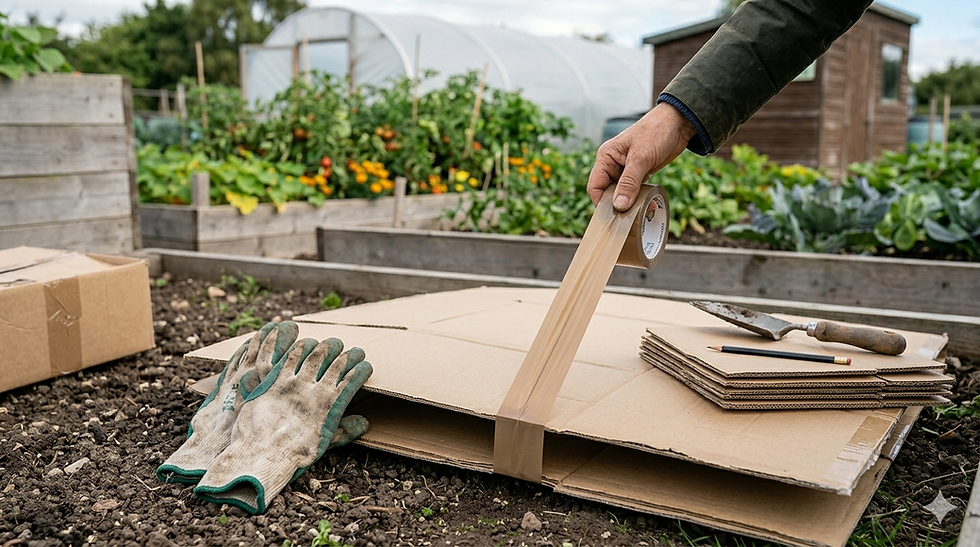
Why Cardboard for no-dig gardening?
Not all "waste" is created equal. Brown cardboard is primarily made of cellulose—a complex carbohydrate that soil organisms love. When you add it to your plot, you are essentially providing a slow-release carbon source.
The Benefits:
Moisture Retention: Cardboard acts like a sponge, holding water in the soil during those dry spells in July and August.
Weed Suppression: A thick layer of cardboard can smother even the most persistent annual weeds by blocking out light.
Worm Magnet: Earthworms are particularly fond of the glue used in corrugated cardboard (which is usually starch-based). They gather under it, aerating your soil as they go.
Cost-Effective: It’s 100% free!
How to Use It on Your Plot
1. Sheet Mulching (The "No-Dig" Method)
This is the most popular use for cardboard at the allotment. If you have a patch of ground that has become overgrown, don't reach for the spade—reach for the boxes.
Prep: Mow or Whack the weeds down as low as possible.
Layer: Overlap large sheets of brown cardboard over the area. Ensure there are no gaps, or the weeds will find the light.
Wet: Thoroughly soak the cardboard with a hose.
Cover: Add 5-10cm of compost or well-rotted manure on top. You can plant directly into the compost immediately!

Ensure you overlap each sheet of cardboard by at least a few inches to prevent gaps.
2. Composting "Browns"
A common mistake in allotment composting is having too much "green" (grass clippings, spent vegetable plants) and not enough "brown."
The Ratio: Aim for a 50/50 mix.
The Method: Shred or tear your cardboard into small pieces before tossing it into the bin. It creates air pockets and prevents the pile from becoming a slimy, anaerobic mess.
3. Path Lining
Tired of weeding your woodchip paths? Lay a double layer of cardboard down before spreading your woodchips. It provides an extra barrier that lasts about a year before naturally decomposing into the soil.

⚠️ A Note on Safety
Before you start hauling boxes to the site, keep these "Gardeners' Rules" in mind:
DO Use | DO NOT Use |
Plain brown corrugated cardboard | Heavily printed or "glossy" cereal boxes |
Boxes with minimal black ink | Cardboard with plastic coating/laminate |
Cardboard with the tape removed | Boxes covered in heavy industrial staples |
Pro Tip: Removing the plastic packing tape is the most tedious part of the job, but it’s essential. Plastic tape doesn't break down and will leave "ghost ribbons" in your soil for years to come.
The Living Soil: Cardboard, Mycelium, and Your Insect Allies
While we often focus on what cardboard does for the structure of our plots, the real magic happens at a microscopic level. When you lay down brown cardboard, you aren’t just mulching; you are creating a bespoke habitat for the biological engines of your allotment.
The Mycelial Network: Nature’s Internet
Fungi are the primary decomposers of tough, woody materials. Because brown cardboard is rich in cellulose and lignin, it acts as a perfect "starter fuel" for beneficial fungi.
Fungal Highway: As the cardboard stays moist and dark, white thread-like structures called mycelium will begin to colonize it. These fungi break down the carbon in the cardboard and trade it with your plants' roots for sugars.
Nutrient Transport: This mycelial network acts like an underground delivery system, transporting phosphorus and nitrogen from the soil directly to your crops.
Soil Aggregation: Fungi produce a "glue" called glomalin. As they digest the cardboard, they help bind soil particles together, improving the crumbly texture (tilth) of your beds.
A Sanctuary for Beneficial Insects
A bare plot is a vulnerable plot. By covering the soil with cardboard, you create a stable micro-climate that protects the "good guys" of the insect world.
1. Ground Beetles and Spiders
Many of our best pest-controllers are nocturnal. A layer of cardboard provides a cool, damp "ceiling" for predatory ground beetles and wolf spiders. During the day, they hide under the cardboard; at night, they emerge to hunt the slugs and aphids that target your greens.
2. The Decomposer Crew
Beyond the earthworm, cardboard supports a massive population of Isopods (woodlice) and Collembola (springtails).
These tiny engineers shred the cardboard into smaller fragments.
Their droppings (frass) are incredibly rich in plant-available nutrients.
They serve as a vital food source for larger beneficial predators, keeping the ecosystem balanced.
3. Soil Aeration without the Blade
Insects and worms tunneling between the cardboard and the soil surface create macropores. These tiny tunnels allow oxygen to reach plant roots and help heavy rain soak into the ground rather than puddling on the surface.

Best Practices for "Life-Friendly" Mulching
To maximize the biological benefits, keep these three tips in mind:
Keep it Damp: Mycelium and beneficial insects require moisture to survive. If the cardboard dries out completely, the fungi will go dormant. Give your cardboard a good soak before covering it with compost.
Avoid the "Ink-Heavy" Sections: While most modern black inks are soy-based, heavy colored inks can sometimes contain metal residues that discourage fungal growth. Stick to the plainest brown sections for the healthiest mycelium.
Leave it Undisturbed: The more you lift or move the cardboard, the more you break the delicate fungal hyphae (threads). Lay it down, cover it, and let the "underground army" work in peace.
Did you know? You might see a white, fuzzy mold growing on the underside of your cardboard after a few weeks. Don't panic! This isn't "rot"—it’s usually saprophytic fungi hard at work turning that shipping box into nutrient-rich humus.
By using cardboard, you are doing more than just suppressing weeds; you are feeding a complex, living web that will make your allotment more resilient, more fertile, and much easier to manage in the long run.
The Verdict
Cardboard is one of the most versatile tools in a grower’s arsenal. It turns a waste product into a soil-building powerhouse, saving your back from unnecessary digging and your wallet from expensive weed membranes.
Next time you see a pile of brown boxes, don't think "trash"—think "tomatoes."
Happy growing!


